Public sector benefits programs are often one of the largest investments a government employer makes in its workforce. Health coverage, retirement plans, wellness initiatives, and voluntary benefits all represent a meaningful commitment to employee well-being.
But here’s the challenge: many organizations invest heavily in benefits without fully understanding how employees experience them.
When employees don’t understand their options or feel confident in their decisions, participation drops, frustration increases, and HR teams are left fielding last-minute questions during open enrollment.
Research highlights the scope of this problem. A study cited by the Harvard Business Review found that 63% of employees do not fully understand the benefits available to them, limiting their ability to make informed decisions about their coverage.
At the same time, an Equitable survey reported that 53% of employees regret at least one benefits choice they made during the previous open enrollment period, indicating that many workers feel unsure about their selections even after enrollment closes.
For public sector employers, where workforce stability and long-term retention are critical, this disconnect can have serious implications.
The good news is that organizations can close this gap by treating employee feedback as a core part of their benefits strategy.
The Public Sector Benefits Blind Spot
Benefits play a major role in public sector recruitment and retention. Government organizations compete with private employers for talent while managing tight budgets and complex regulations.
Yet many HR teams still operate without structured insight into how employees actually experience their benefits.
That matters because employee sentiment directly influences engagement and retention. According to the American Psychological Association’s Work in America survey, 19% of employees say they plan to look for a new job within the next year, and workplace benefits are a key factor in those decisions.
When employees feel confused about coverage, overwhelmed by enrollment decisions, or unsure how to use their benefits, they are less likely to see those benefits as a meaningful part of their total compensation.
For HR teams, that often shows up as:
-
A surge of questions during open enrollment
-
Low utilization of available programs
-
Employees selecting plans that don’t match their needs
-
Increased frustration with the enrollment process
In short, a benefits program that looks strong on paper may still fail to deliver value if employees don’t understand or trust it.
Employee Feedback: The Missing Piece in Benefits Strategy
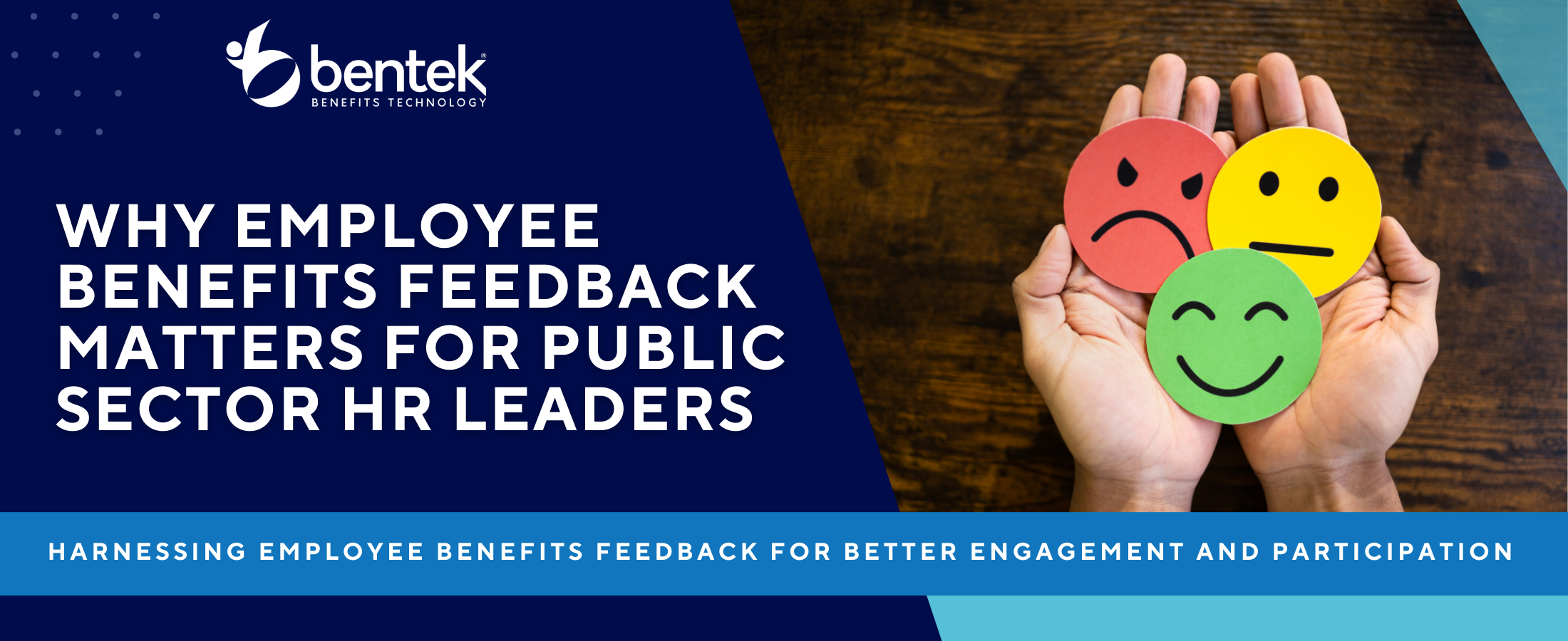
Collecting employee feedback turns benefits administration from a one-way communication process into a two-way conversation.
Instead of guessing what employees need, HR teams can use direct feedback to make smarter, data-driven decisions about their benefits programs.
When public sector organizations regularly gather employee input, they gain insight into questions such as:
-
Which benefits employees actually value
-
Where employees struggle to understand their options
-
Which communications are effective, and which are ignored
-
What improvements employees want most in future enrollment periods
This information helps HR leaders align their benefits strategy with the real needs of their workforce rather than assumptions.
Why Benefits Feedback Matters for HR and Finance Teams
Employee feedback is not just a communication tool; it’s a strategic resource that can improve benefits performance across the entire organization.
1. Improve Benefits Utilization
Employees cannot take advantage of benefits they don’t understand.
When HR teams collect feedback after enrollment periods or benefits education sessions, they often discover gaps in awareness or confusion about eligibility rules, plan differences, or coverage options.
Addressing these issues improves participation and ensures that the organization’s benefits investment actually delivers value to employees.
2. Reduce Open Enrollment Stress
Open enrollment is one of the most demanding periods of the year for HR teams.
Without proactive communication and feedback loops, employees may wait until the final days to ask questions or make changes.
Structured feedback surveys after enrollment allow HR teams to identify friction points and improve the process for the next cycle, reducing administrative burden and improving the employee experience.
3. Strengthen Employee Trust
Employees are more likely to trust their employer’s benefits program when they feel their voices are heard.
Organizations that regularly collect and act on feedback demonstrate that employee well-being is a priority, not just a compliance obligation.
This approach builds a stronger workplace culture and reinforces the value of benefits as part of total compensation.
4. Inform Better Benefits Decisions
Public sector leaders must balance workforce needs with budget constraints and regulatory requirements.
Employee feedback provides HR and finance teams with real-world data to guide decisions about:
-
Adding new benefits programs
-
Improving plan communications
-
Adjusting contribution structures
-
Identifying programs that may not be delivering value
Instead of making changes based on assumptions, leaders can rely on employee insight combined with enrollment data to make informed decisions.
Making Benefits Feedback Part of Your Year-Round Strategy
Many organizations think about employee feedback only during open enrollment.
In reality, the most successful benefits strategies treat feedback as an ongoing process throughout the employee lifecycle.
Public sector HR teams can incorporate feedback by:
-
Running post-enrollment surveys
-
Gathering feedback during benefits education sessions
-
Reviewing HR service desk questions to identify recurring issues
-
Partnering with brokers or consultants to analyze benefits utilization trends
Over time, these insights create a clearer picture of how employees experience their benefits and where improvements will have the greatest impact.
The Bigger Picture: Turning Insight Into Better Benefits
Benefits programs are one of the most visible ways an employer supports its workforce. But their impact depends on how well employees understand and engage with them.
By prioritizing employee feedback, public sector organizations can:
-
Increase benefits participation
-
Improve employee satisfaction
-
Reduce confusion during open enrollment
-
Strengthen workforce retention
In other words, employee feedback transforms benefits from a compliance requirement into a strategic workforce investment.
See How Modern Benefits Administration Platforms Support Better Engagement
Collecting feedback is only the first step. Acting on those insights requires accurate data, streamlined enrollment processes, and clear reporting across HR, payroll, and carrier systems.
Bentek’s benefits administration platform helps public sector organizations modernize benefits enrollment, improve communication with employees, and gain the operational visibility needed to turn feedback into measurable improvements.